Learning Academy
Understanding IFTA: Fuel Tax, Filing, and Recordkeeping
A plain-English walkthrough of IFTA reporting, deadlines, calculations, and common mistakes.
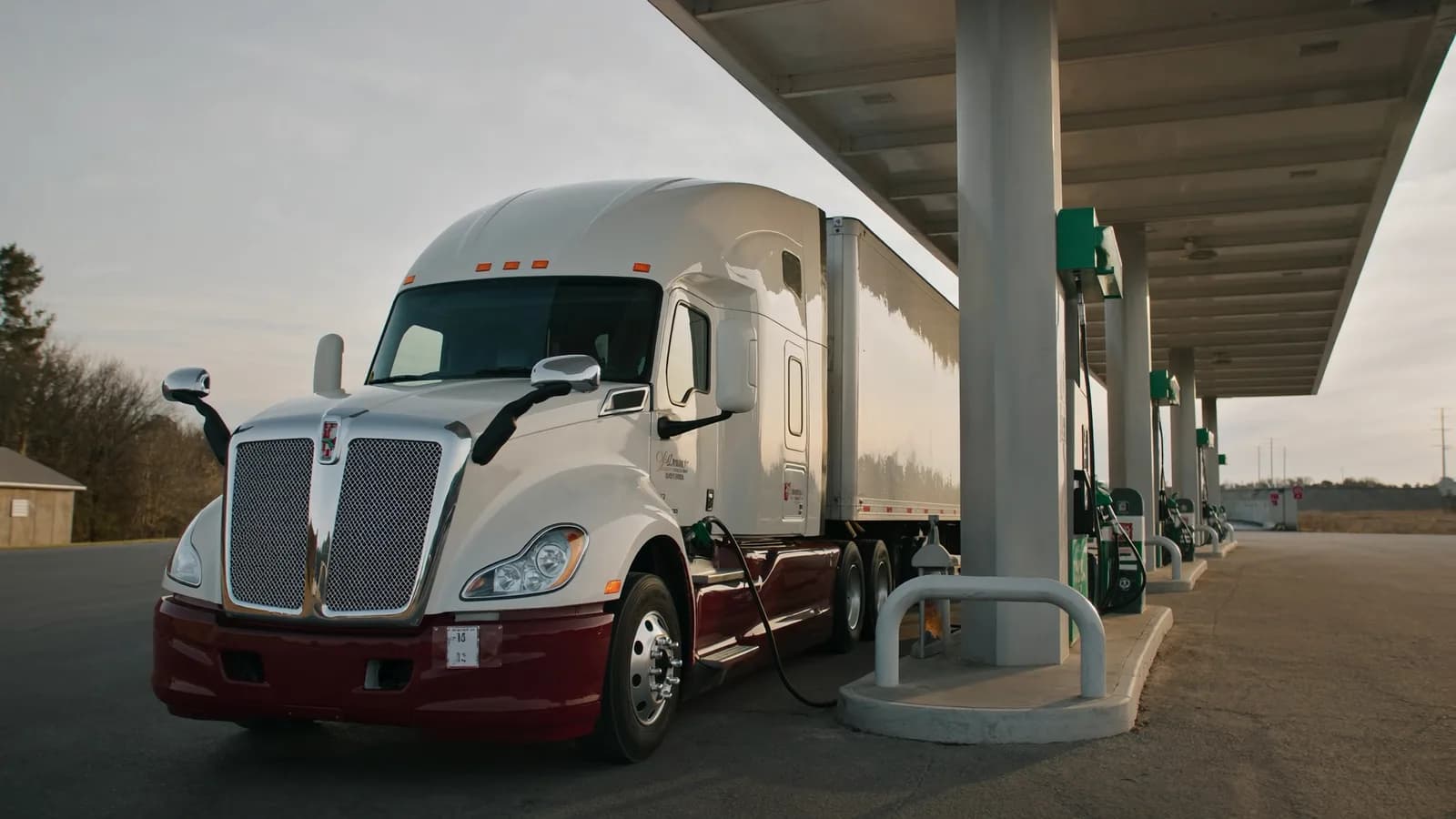
IFTA lets an interstate motor carrier report fuel use taxes to one base jurisdiction instead of filing separately with every member state or province in which its qualified vehicles travel.
It does not create one uniform fuel-tax rate, and it does not mean fuel tax is paid only where diesel is purchased. The carrier reports distance traveled and fuel purchased by jurisdiction. The base jurisdiction then calculates and distributes the net tax or credit among the member jurisdictions.
That is the core idea: IFTA reconciles where fuel was bought with where fuel was used.
Who needs IFTA?
IFTA generally applies when a qualified motor vehicle operates in two or more member jurisdictions.
A qualified motor vehicle is used, designed, or maintained to transport people or property and meets at least one of these tests:
- It has two axles and a gross vehicle weight or registered gross vehicle weight over 26,000 pounds.
- It has three or more axles on the power unit, regardless of weight.
- It is used in a combination with a combined gross or registered gross weight over 26,000 pounds.
Recreational vehicles are excluded when used for personal recreation rather than business.
A two-axle box truck registered at exactly 26,000 pounds does not meet the IFTA weight test by that fact alone. A three-axle power unit can qualify regardless of weight. A lighter power unit and trailer can qualify when the combination exceeds 26,000 pounds.
What if the carrier is not IFTA licensed?
A carrier that occasionally enters another jurisdiction may be able to buy a temporary fuel trip permit instead of maintaining an IFTA license. The permit must be obtained according to that jurisdiction's rules before or when entering as required.
Trip permits can make sense for rare travel. They are usually inefficient for regular multistate operations. Operating without required credentials can lead to citations, permit purchases, delay, and possible out-of-service consequences under state law.
Choosing the base jurisdiction
The carrier applies for IFTA through its base jurisdiction, usually the state or province where:
- The qualified vehicles are registered.
- Operational control and records are maintained or can be made available.
- The fleet travels in that jurisdiction.
The base jurisdiction issues the license and decals, receives the returns and payments, processes credits, and can audit the carrier on behalf of all IFTA members.
The company does not choose a base jurisdiction only because its fees are lower. The operation must meet the base-jurisdiction requirements.
IFTA license and decals
An approved account normally receives:
- One IFTA license for the fleet.
- Two current-year decals for each qualified vehicle.
Keep a copy of the license in each qualified vehicle and display the decals in the required locations. Decals are vehicle-specific and should not be transferred to another vehicle without authorization.
IFTA credentials are generally renewed annually. The agreement provides a January-February display grace period for renewing carriers, but the vehicle must carry valid current or prior-year credentials as allowed, or a valid trip permit. Do not treat the grace period as permission to ignore renewal.
IFTA quarterly filing deadlines
Most IFTA accounts file for the previous calendar quarter, even when the fleet had no operations or used no taxable fuel during the quarter.
| Reporting quarter | Period covered | Normal due date |
|---|---|---|
| Q1 | January 1-March 31 | April 30 |
| Q2 | April 1-June 30 | July 31 |
| Q3 | July 1-September 30 | October 31 |
| Q4 | October 1-December 31 | January 31 |
If the due date falls on a Saturday, Sunday, or legal holiday, the next business day is treated as the due date under the IFTA agreement. File through the base jurisdiction's portal and follow its payment rules.
Some very low-mileage carriers may request annual reporting if they meet the agreement's criteria and receive base-jurisdiction approval. Do not switch to annual filing without approval.
How IFTA is calculated
The return generally follows four steps for each fuel type.
1. Calculate fleet fuel economy
Total distance includes taxable and non-taxable distance as required by the return. Total fuel includes all fuel used by the qualified vehicles, not only fuel for which a tax-paid credit is claimed.
2. Calculate taxable gallons for each jurisdiction
3. Compare taxable gallons with tax-paid gallons
A positive result generally creates tax due. A negative result generally creates a credit, subject to the jurisdiction's rules and the overall return.
4. Apply the quarter's jurisdiction rate
Use the official rate for the fuel type and quarter. Rates can change from one quarter to the next.
Simple IFTA example
Assume a fleet travels 18,000 total miles and uses 3,000 gallons of diesel during the quarter.
- Fleet MPG = 18,000 / 3,000 = 6 MPG
- The fleet travels 6,000 taxable miles in Jurisdiction A and buys 800 tax-paid gallons there.
- Taxable gallons: 6,000 / 6 = 1,000 gallons.
- Net taxable gallons: 1,000 - 800 = 200 gallons.
- The carrier owes the quarter's Jurisdiction A tax rate on 200 gallons.
- The fleet travels 12,000 taxable miles in Jurisdiction B and buys 2,200 tax-paid gallons there.
- Taxable gallons: 12,000 / 6 = 2,000 gallons.
- Net taxable gallons: 2,000 - 2,200 = -200 gallons.
- The negative amount creates a potential credit using Jurisdiction B's rate.
The actual return nets the jurisdiction calculations and applies any interest, penalty, prior balance, or credit rules. This example is intentionally simplified.
Records an IFTA carrier must keep
The carrier must be able to prove both distance and fuel. IFTA's 2026 Procedures Manual requires records to be retained for four years after the return was due or filed, whichever is later, plus any additional period covered by an audit, waiver, or assessment.
Distance records
Acceptable trip-level records should document items such as:
- Trip start and end dates.
- Origin and destination.
- Route of travel.
- Beginning and ending odometer, hubometer, or ECM readings.
- Total trip distance.
- Distance traveled in each jurisdiction.
- Vehicle identification or unit number.
For distance records produced by a GPS or vehicle-tracking system, the 2026 Procedures Manual requires a record at least every 10 minutes while the engine is on. The data must include date and time, latitude and longitude to at least four decimal places, ECM odometer data or an allowed alternative, and the vehicle or unit identifier. It must be accessible in an electronic spreadsheet-style format such as XLS, XLSX, CSV, or delimited text. A static PDF, image, or Word report is not an acceptable substitute for the underlying tracking data.
Fuel records
To claim tax-paid credit, a retail receipt, invoice, card record, or eligible transaction listing should show:
- Purchase date.
- Seller's name and address or identifiable vendor code.
- Gallons or other fuel quantity.
- Fuel type.
- Price per unit or total price.
- The qualified vehicle or unit fueled.
- Purchaser name that can be legally connected to the licensee.
Illegible, altered, or incomplete receipts can cause the tax-paid credit to be denied. Fuel purchased for reefer units or other non-qualified equipment should not be mixed into the power-unit IFTA calculation.
The biggest IFTA mistakes
Reporting only loaded miles
Empty, deadhead, repositioning, and other travel still count in total distance. Excluding them distorts fleet MPG and jurisdiction miles.
Using fuel-card gallons without reconciling vehicles
Fuel-card reports can include reefer fuel, shop fuel, another truck, duplicate transactions, or a purchase outside the quarter. Reconcile each transaction to a qualified power unit.
Claiming fuel without valid support
A bank statement proves money was spent; it may not prove the gallons, fuel type, seller, unit, or tax-paid purchase needed for IFTA credit.
Missing a zero return
An active quarterly account must generally file even when no qualified vehicle operated. No miles does not automatically mean no filing.
Using the wrong quarter's rates
Use the official IFTA rate matrix for the return period and fuel type. Do not reuse last quarter's spreadsheet without refreshing it.
Treating ELD summary reports as complete audit records
An ELD compliance report and an IFTA distance record are not necessarily the same product. Confirm that the system retains and exports the detailed location and distance data required for an IFTA audit.
Ignoring permit and exempt miles
Trip-permit travel, non-taxable distance, toll-road treatment, fuel-tax holidays, and jurisdiction exemptions can require special reporting. Retain the permit or authority for the treatment claimed.
What happens if an IFTA return is late?
A late return or unpaid balance can lead to penalty, interest, estimated assessments, collections, or suspension or revocation of the IFTA license. The agreement permits a penalty of $50 or 10 percent of delinquent tax, whichever is greater, with special rules for Canadian jurisdictions and possible waivers under base-jurisdiction law. Interest is calculated by jurisdiction under the current agreement.
The practical risk is larger than the fee. A suspended account can prevent lawful interstate travel until delinquent returns and payments are processed.
A clean quarterly IFTA workflow
- Lock the quarter's start and end dates.
- Export unit-level GPS or trip distance data.
- Reconcile total miles to odometers and dispatch records.
- Allocate distance by jurisdiction and identify permitted or exempt travel.
- Export fuel-card data and collect cash or retail receipts.
- Remove non-qualified equipment fuel and resolve missing unit numbers.
- Reconcile total fuel and calculate fleet MPG by fuel type.
- Load the correct quarter's official tax rates.
- Review unusual MPG, negative miles, duplicate fuel, and large credits.
- File and pay through the base jurisdiction by the due date.
- Save the filed return, confirmation, payment, workpapers, distance data, and fuel support together.
Frequently asked questions
Is IFTA the same as IRP?+
No. IFTA administers motor-fuel use tax. IRP apportions vehicle-registration fees among jurisdictions. Many interstate heavy vehicles need both, but each program has its own application, records, and reporting rules.
Do I file IFTA if the truck did not run?+
Generally yes, while the quarterly IFTA account remains active. The agreement requires a return even when no operations occurred or no taxable fuel was used, unless the base jurisdiction has approved another reporting arrangement.
Does a 26,000-pound box truck need IFTA?+
A two-axle vehicle at exactly 26,000 pounds does not meet the “exceeding 26,000” test by weight alone. It may qualify if the power unit has three or more axles or if it operates in a combination exceeding 26,000 pounds. State permits or other taxes can still apply.
Can a carrier get an IFTA license before authority is active?+
Application timing and evidence requirements vary by base jurisdiction. Even if credentials are issued, they do not replace required FMCSA authority or insurance. The carrier must satisfy every applicable requirement before operating.
Are ELD miles enough for IFTA?+
Only if the system and retained data meet IFTA recordkeeping requirements and accurately allocate all distance. A summary PDF alone may not be enough. Keep exportable underlying location, odometer, time, and unit data as required.
Related reading
Official sources referenced
- IFTA, Inc.: Carrier Information
- IFTA 2026 Articles of Agreement
- IFTA 2026 Procedures Manual
- IFTA: Official Tax Rate Matrix
This guide is general information, not legal, tax, or insurance advice. Requirements change and can vary by state, equipment, and operation, so verify current requirements with the relevant agency before acting.